MonStr-O
Digital sensor node with a 3-axis accelerometer, 2-axis inclinometer, gyroscope and thermometer in an IP68 box.

ASDEA Hardware designs and manufactures sensors and acquisition systems for structural health monitoring (SHM).
The patented MonStr system was born from the need for structural condition monitoring that is modular, customizable and cost-efficient, and that incorporates the most modern technologies in the field.
We Monitor the present to preserve your Future

Digital sensor node with a 3-axis accelerometer, 2-axis inclinometer, gyroscope and thermometer in an IP68 box.
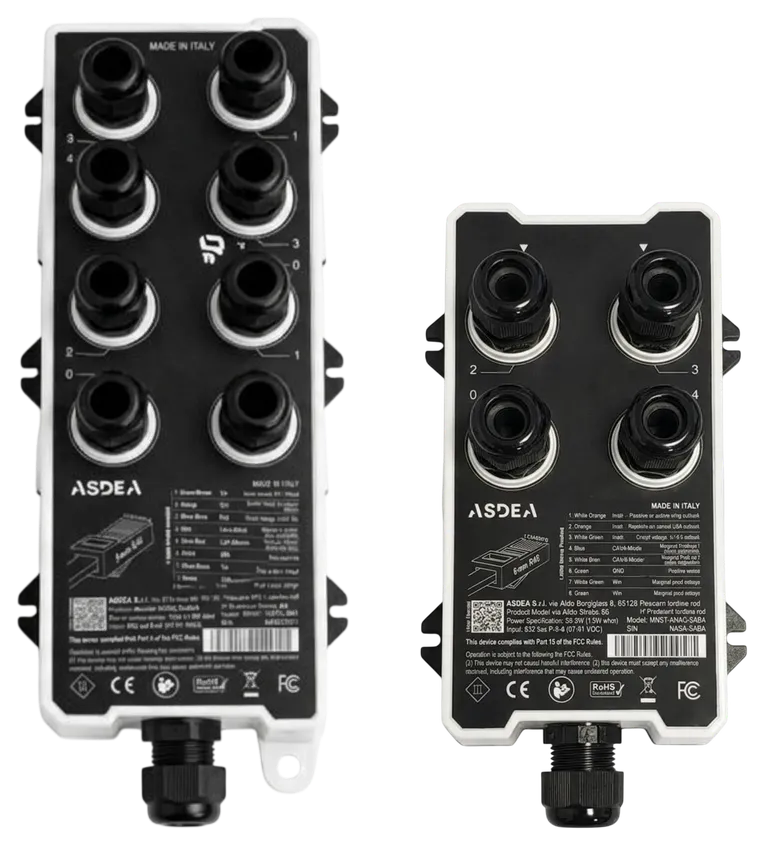
4- or 8-channel analogue-to-digital acquisition units for analogue sensors, installed in the field next to the sensors.
Electrical cabinet that connects, powers and manages sensor networks in the field, in three configurable versions.
Portable station to acquire and analyse data in the field, with operational modal analysis (OMA).
MonStr-O is the MonStr node designed for structural health monitoring. An IP68 aluminium box holds an extremely low-noise 3-axis accelerometer and a 2-axis inclinometer, both designed specifically for SHM, a 3-axis gyroscope and an internal thermometer.
A synchronization engine syncs the clocks of an unlimited number of devices on the network. A single connector carries both power supply and data, with plug and play functionality: connect one cable and the node starts working automatically.

MonStr system for SHM gives you access to your data from anywhere via the web app.
Data provided through hdf5 database.
Sensor parameters for each device on the network can be customized by selecting the dynamic range, sample frequency, etc. The acquisition software automatically customizes all devices.
Each MonStr draws a mere 0.6W.
Each node's sensors and features are independently configurable.
MonStr sensors are rugged enough to work under tough environmental conditions.
Certified against water and dust ingress.
Connect the devices to the central data collector and automatically start monitoring. Devices can be added or removed from the network at any time, by plugging in the MonStr nodes.
Unlimited channels are synchronized with each other to a fraction of a millisecond, assuring the temporal coherence between all collected data.
The sensors are designed to be installed in any condition, thanks to the use of a single ethernet cable for both power supply and data transport.
MonStr Nodes can be easily added to or removed from the monitoring system, making the system fully extendable and scalable.
MonStr-O Nodes sensors and features can be customized depending on the application.
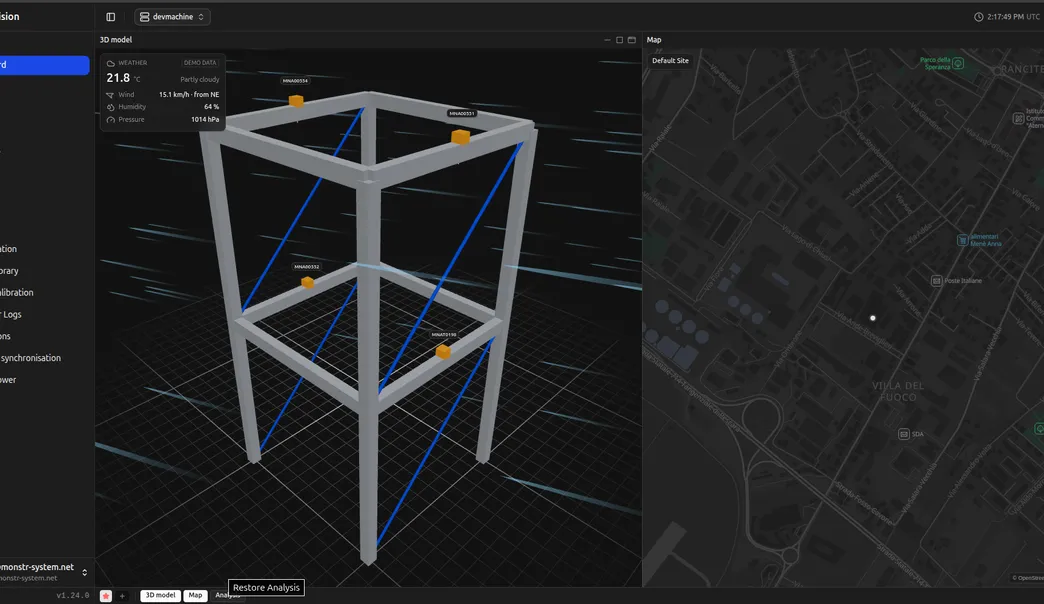
The MonStr True Vision dashboard tracks, analyzes and displays key performance indicators to monitor the overall health of your assets, and can be tailored to specific needs. A web app gives access to the data from any device, so you can review up-to-date measurements during a site visit.
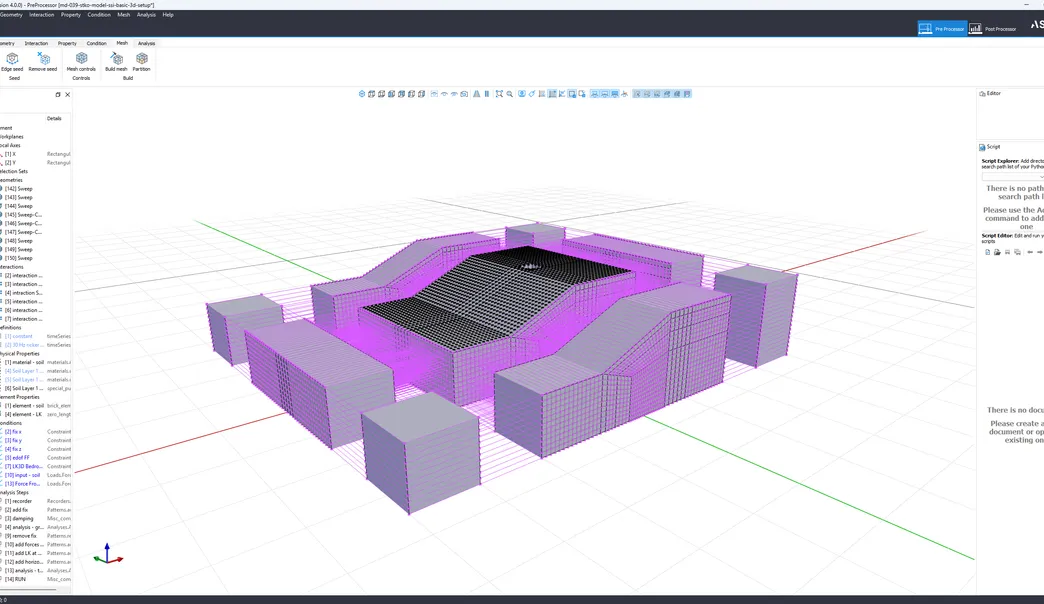
STKO was extended for use in the MonStr system to work with AI: the digital twin learns the structure over time, resulting in a model that is highly representative of real conditions. Sensor data are written in the HDF5 database, the same database used by STKO.
MonStr-Adaq is the family of high-performance analogue-to-digital acquisition units for passive and active analogue sensors, used mainly in static or low-frequency conditions.
Simultaneous acquisition on all channels, up to 100 Hz, with a 120 dB dynamic range.
Programmable gain and configurable excitation voltage or current on every channel.
±10 V, 4-20 mA, mV/V, PT100, PT1000, potentiometers and full, half and quarter Wheatstone bridges.
Surge protection and galvanic isolation up to 4 kV.
A single PoE ethernet cable, up to 100 m.
IEEE 1588, accurate to the microsecond.
From -20 °C to +70 °C.
Data are stored in HDF5, CSV or text format, ready for ASDEA or third-party software.
Designed to be installed in the field next to the sensors, in an IP68 aluminium enclosure.
They digitise the signal at the source and keep analogue cable runs to a minimum.
The modular architecture scales over long distances and a large number of devices.
MonStr Panel is the electrical enclosure that connects, powers and manages sensor networks in the field, indoors and outdoors: designed for structural health monitoring, it also suits other data acquisition applications, such as the monitoring of industrial machinery. It comes in three versions, Control Panel, Connect Panel and Radio Panel, and is configured around each installation.
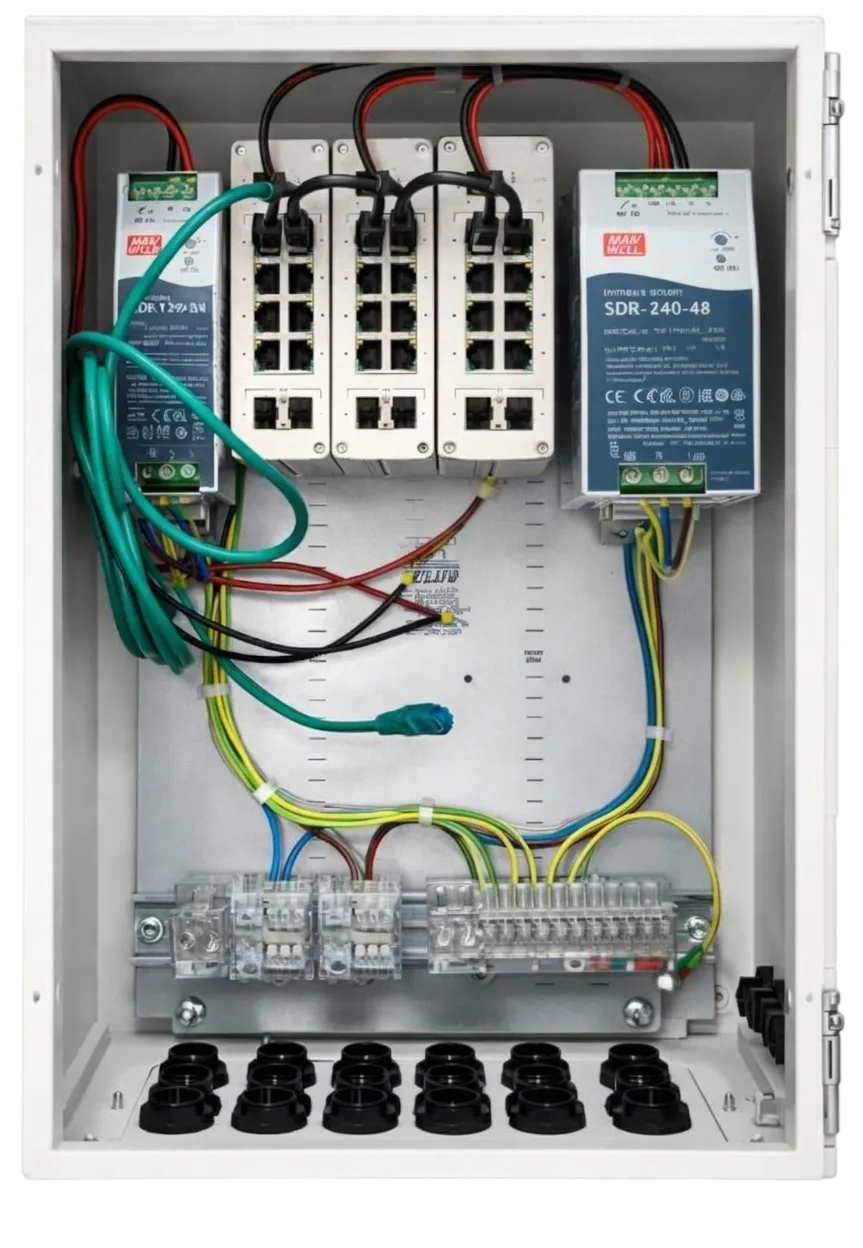
12, 24 or 48 V power supplies; accepts 220 VAC mains power or 12, 24 or 48 V DC.
Industrial ethernet switches and protocol converters.
Industrial PC and analogue acquisition unit.
4G/5G modem and solid-state relays to switch the 220 V supply on and off remotely.
The cabinet, in metal or plastic with one or more doors, houses the components each installation requires.
Through dedicated cable glands it connects every external sensor, the internet or customer network and, where required, the downstream panels, which it can also supply with power.
Internal disconnectors make it possible to isolate individual components.
MonStr Polaris is the portable station for acquiring and analysing static and dynamic structural monitoring data and for non-destructive testing: a complete system housed in an IP66 industrial case weighing about 15 kg, with a touch screen and a lithium battery.

Continuous operation at full load on the lithium battery.
Automatic detection of the connected sensors.
Analogue sensors connected through the MonStr-Adaq acquisition units.
The analysis software developed by ASDEA processes data in real time.
Thresholds and triggers on the acquired data.
Operational modal analysis with the SSI-COV and SSI-AUTO algorithms.
Custom reports on the monitoring data.
Remote control of the station via SIM.
It connects the MonStr-O digital sensors and, through the MonStr-Adaq acquisition units, analogue sensors such as displacement transducers, strain gauges, piezometers and load cells.
It performs operational modal analysis (OMA) in the field, extracting natural frequencies, damping ratios and mode shapes.
It displays the mode shapes directly on the 3D model of the structure, built in the software or imported in DXF format.

Research project for a structural and environmental risk management system based on a monitoring network, AI-driven self-updating computational models and a control dashboard.
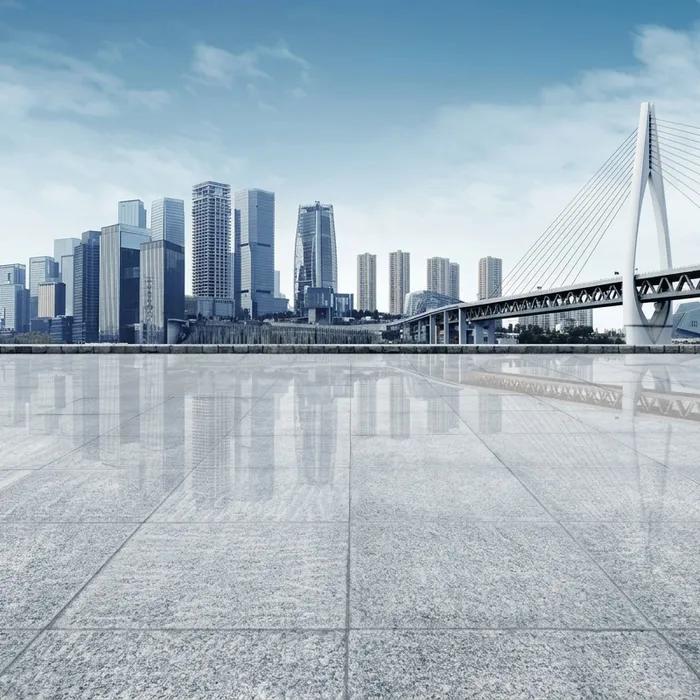
Internal research project to develop a digital twin of structures and infrastructure, combining finite element models, monitoring data and artificial intelligence to manage seismic risk and ageing.

Research project for an integrated digital platform combining multi-sensor data, Digital Twins, multi-risk analysis and virtual reality for the sustainable conservation of built heritage.

Research project for an IT platform that collects and processes information on historic and cultural heritage, from the territorial scale to the single building, to manage the seismic risk of historic centres in Southern Italy.
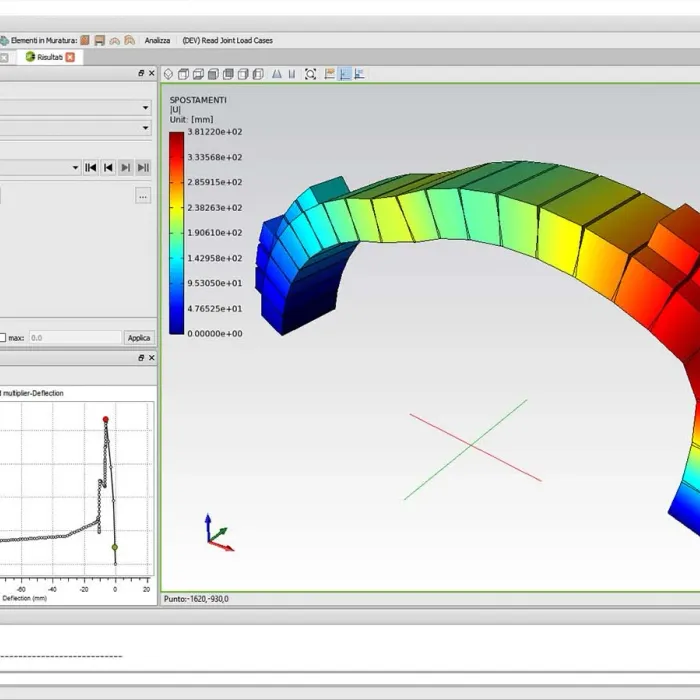
Custom software developed for Kerakoll to design and analyse reinforced concrete, prestressed concrete, timber and masonry structural elements, including strengthening systems. More than 10,000 users.
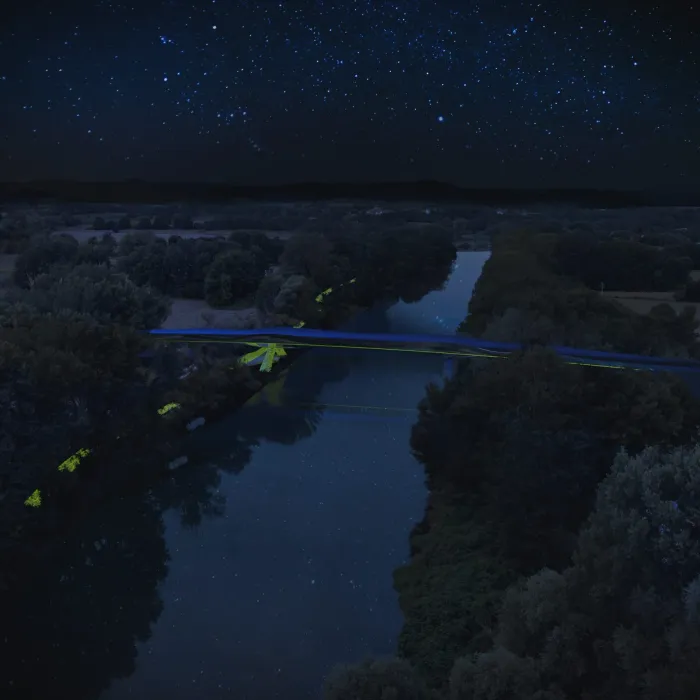
Third-placed design in the Province of Arezzo competition for a new bridge over the Arno next to the historic Buriano Bridge, with five spans, reflective aluminium cladding and photoluminescent elements.
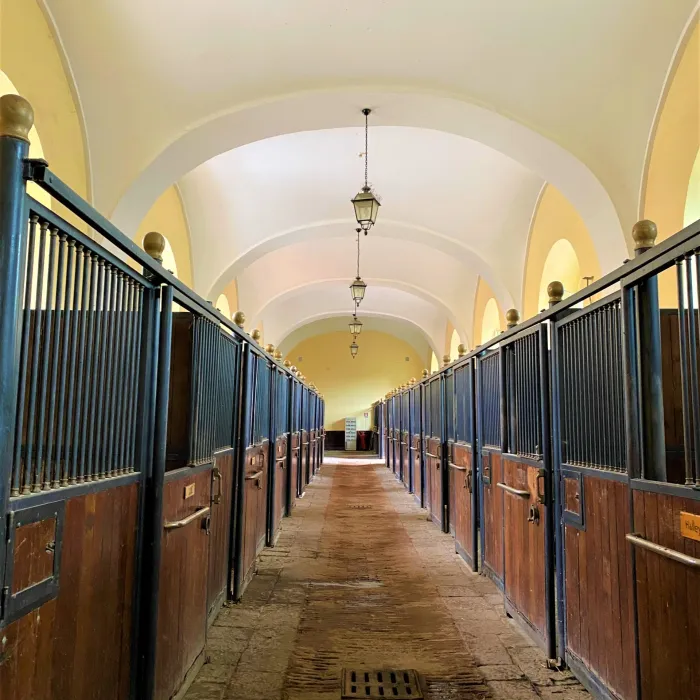
Seismic vulnerability assessment, energy audit, BIM survey and technical and economic feasibility design of the Capodimonte Stables, in the Royal Capodimonte Forest in Naples.

Custom software developed for Logica Tre to analyse reinforced concrete beam-column joints and design their strengthening with the patented SIS.MI.C.A.® system, in accordance with the Italian NTC 2018.

Post-processor developed with CSPFea for the linear and nonlinear checks of masonry structures according to the Italian NTC 2018, integrated with Midas software and open to results from other solvers.
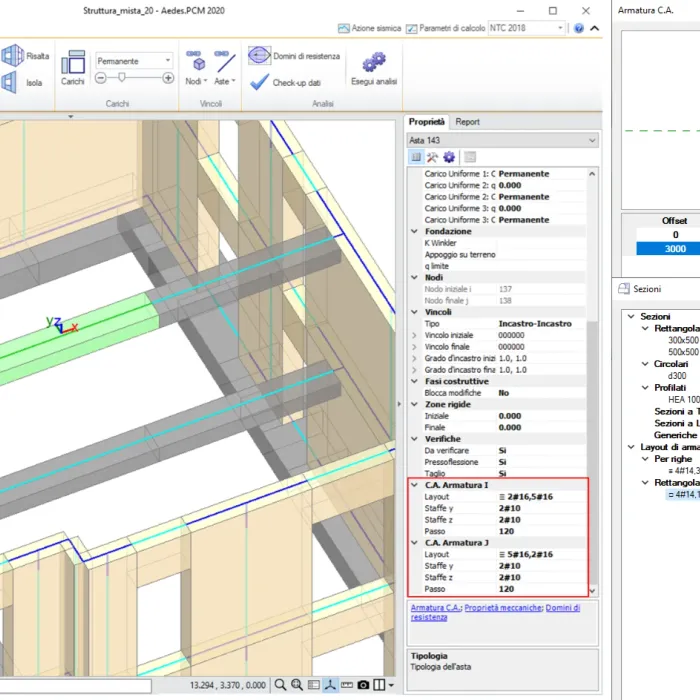
For Aedes Software we developed and validated the theory of the nonlinear plastic hinges that PCM, the BIM software for masonry buildings, uses to model existing and strengthened reinforced concrete elements.

From the collaboration between ASDEA S.r.l and Walter Tosto S.p.A. comes the WOLF project, a revolutionary “smart factory” project for a progressive and adaptive manufacturing paradigm for large items and equipment typical of industrial boilermaking.

BIM-based structural design of a luxury residential estate in Nairobi, with single-family villas, duplexes and apartments in reinforced concrete and cold-formed steel.

Assessment of the state of degradation and safety of the bridge over the Tramigna stream, at km 303+153 of the A4 motorway, a three-span reinforced and prestressed concrete structure built in the 1960s and widened in 1989–1990.

BIM-based schematic design and design development of two 13-storey reinforced concrete towers in Pescara, with 3D laser scanning and drone survey of the site.

Seismic vulnerability assessment, carried out with non-linear analyses, of the current state of L’Aquila Municipal Theatre, a neoclassical building damaged by the 2009 earthquake.

Static and seismic adaptation of Teramo’s G. Mazzini Hospital through steel exoskeletons with dissipative bracing connected to the existing structure.

Design of the new lower secondary school in Castilenti, replacing the building declared unfit for use after the earthquake of 6 April 2009, with particular attention to seismic design and sustainability.
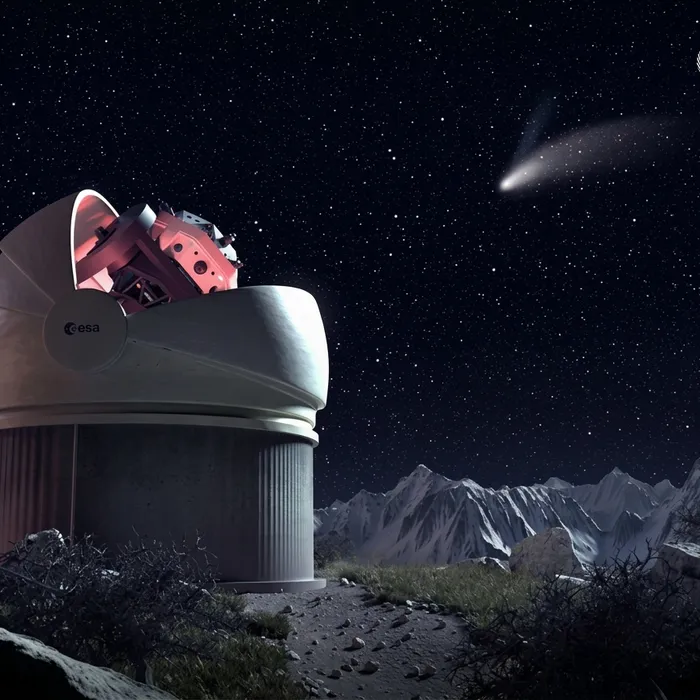
Linear dynamic analysis and base design for ESA’s Flyeye telescope on Monte Mufara, to protect its delicate optics from seismic accelerations.

Repair and local strengthening of Villa Abbati-Tirone in Penne, a listed noble residence severely damaged by the 2016 earthquake.
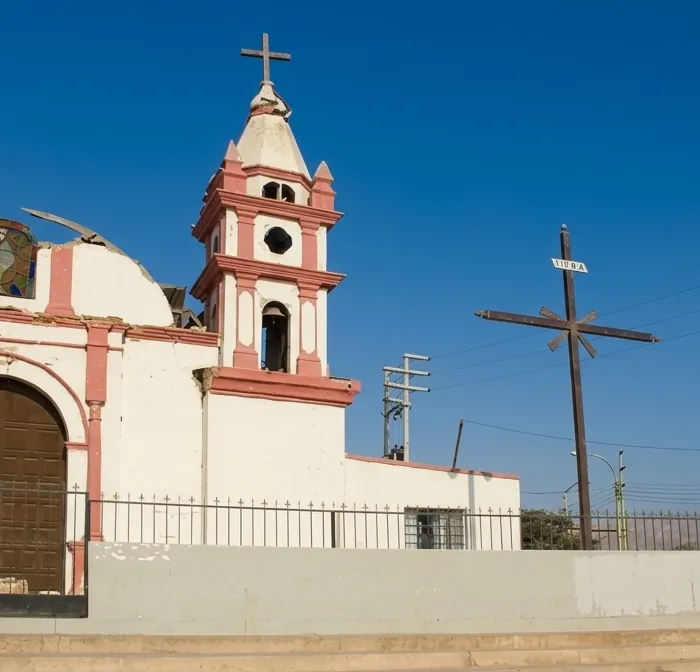
Restoration, reconstruction and static and seismic retrofit of the San José de Los Molinos Church in Ica, Peru, severely damaged by the 2007 earthquake.

Structural and sustainable recovery of the former Monastery of St. Catherine in the historic centre of L’Aquila, severely damaged by the 2009 earthquake, using innovative, reversible and compatible techniques.

Design-and-build contract to improve the detailed design of a two-level underground car park and the office building above it, with double-sliding-surface friction pendulum seismic isolation.
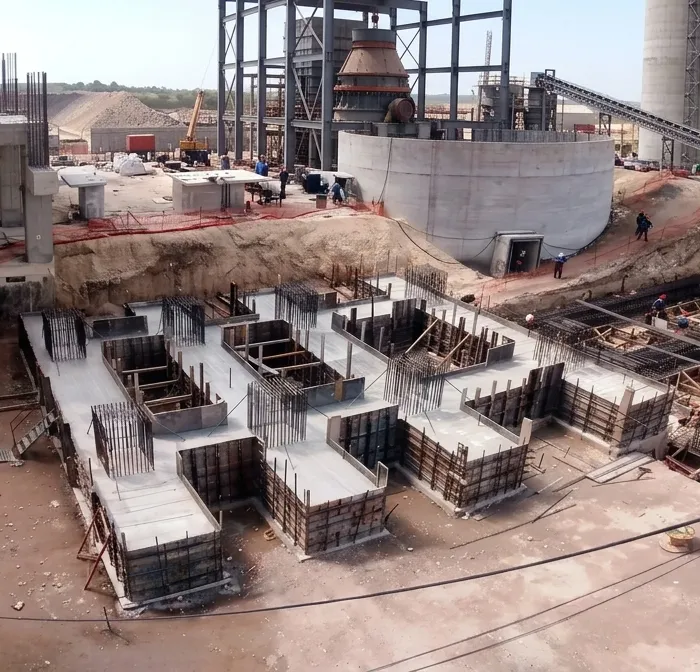
Structural design of the Plug Valve Building and the Clay Processing Plant at the CEMENTOS Y CONCRETOS Moctezuma cement plant in Veracruz, Mexico, in a highly seismic area and under very high design loads.

Versatile pre- and post-processor for external numerical solvers, with CAD modelling, meshing and scripting. It was the precursor to STKO.

Structural design for the repair and seismic improvement of Centi Palace in L’Aquila, one of the most important monuments of the L’Aquila Baroque, heavily damaged by the 2009 earthquake.
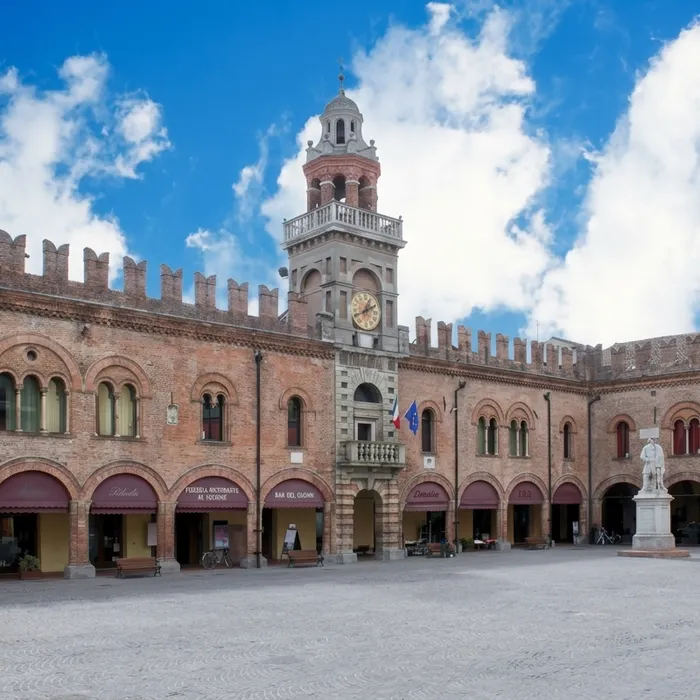
Repair of the 2012 earthquake damage and seismic improvement of Cento City Hall, a listed historic building, with 3D laser scanning and drone survey.

Structural design of the steel structures supporting the flue gas treatment systems of a 25 MW biomass-fired thermoelectric power plant in S. Agata di Puglia.

Seismic improvement and energy efficiency of the two hospital buildings of the diabetology and cardiology centers in Kut, Iraq, with a sliding pendulum base isolation system and a double skin façade.
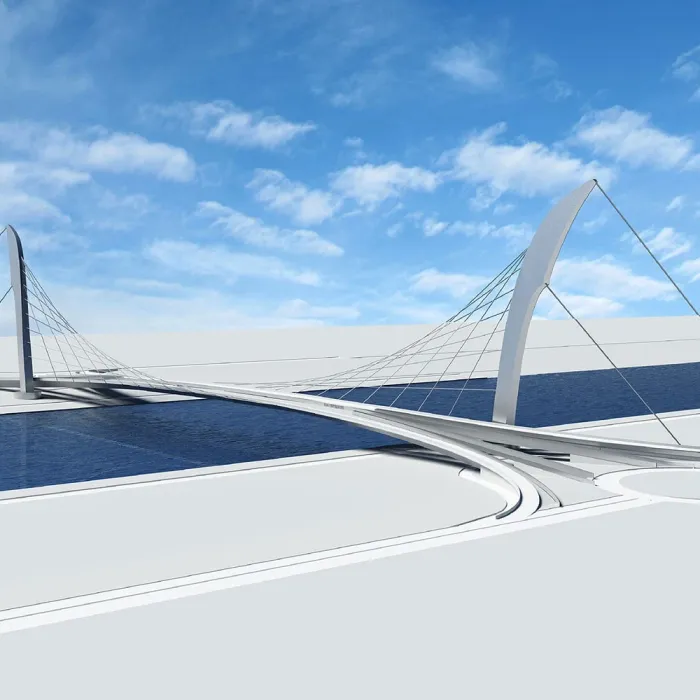
Two design proposals for the Petra Indah Bridge in Malaysia, a five-span prestressed concrete box girder bridge with an illuminated cover over the central span and a cable-stayed bridge with two towers.

BIM-based structural design of St. Stephen’s Anglican Church in Otuoke, Nigeria, with a double-curved steel gridshell spanning 60 m and rising 37 m.

Repair of the damage caused by the April 2009 earthquake, seismic improvement and redevelopment of the Ex G.I. Maschile building in L’Aquila, including a full makeover of the Council Chamber.
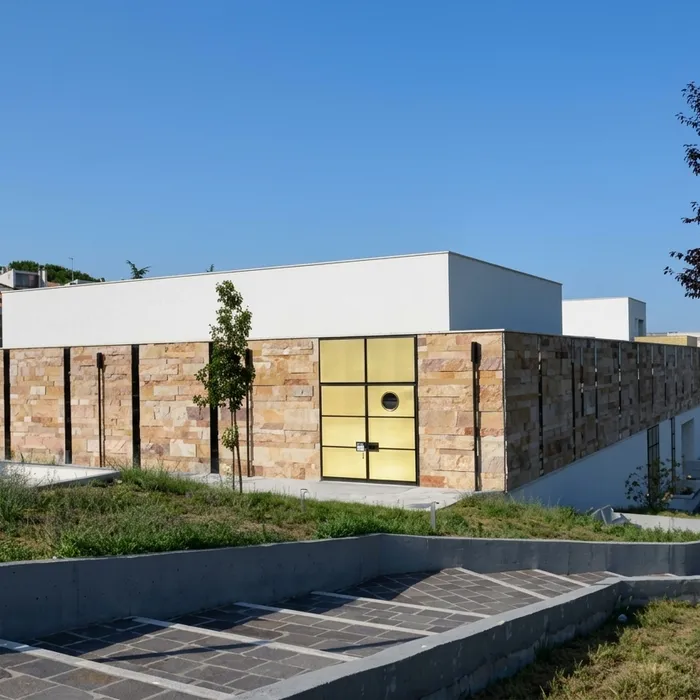
Preliminary, final and detailed design and construction management of the “Il Risorto” (Risen Lord) Parish Complex in Teramo, comprising a rectory, a steel-framed church and a weekday chapel.

Repair and seismic improvement of Villa Raisi in Medolla, a historic masonry building severely damaged by the earthquake of 29 May 2012, including the consolidation of its large central dome.

Seismic vulnerability assessment and planning of interventions to mitigate the structural deficiencies of the monumental complex that houses the Municipal Residence of the Municipality of Ravenna.

Seismic hazard study and three-dimensional (horizontal and vertical) seismic isolation system for ESO’s E-ELT on Cerro Armazones, Chile.

Renovation and seismic retrofit of the former wine cooperative complex in Città Sant’Angelo, transformed into a hotel, retail and commercial venue.

Structural design of the Ta’ Barkat sewage treatment plant in Malta, a complex of biofiltration tanks spread over five buildings and an industrial building for sludge treatment.

Seismic vulnerability assessment of the church of Santa Maria Maggiore in Guardiagrele through nonlinear numerical models of the masonry and soil-structure interaction analysis.

Seismic evaluation and seismic improvement design of the Cyclone Tower, a 73 m high structure at the Cementi Rossi plant in Pederobba, strengthened with EB-FRP carbon fibers and an epoxy resin tailored to its high operating temperatures.